tool-bits
How I Built an SEO Talk (and Its Website) with AI Agents: The Best Place to Hide a Dead Body
I gave an SEO talk to marketing students at NU Las Piñas. Here's the behind-the-scenes of how the deck, the fictional hero, the real TSC data, and the cebkun.com version came together with AI agents.
Hey BitLods.
On November 25, 2026, I gave a talk at Marketalks, an event by the National University Las Piñas Junior Marketing Association (JMA). The topic was SEO, for marketing students.
The title of the talk:
"The Best Place to Hide a Dead Body."
The joke goes like this: the safest place to hide a dead body is page 2 of Google, because nobody ever goes there.
Of course, no bodies are hiding on page 2. Businesses are.
This post is the behind-the-scenes of how I built that talk with AI agents, and how the slides ended up on cebkun.com.
The talk
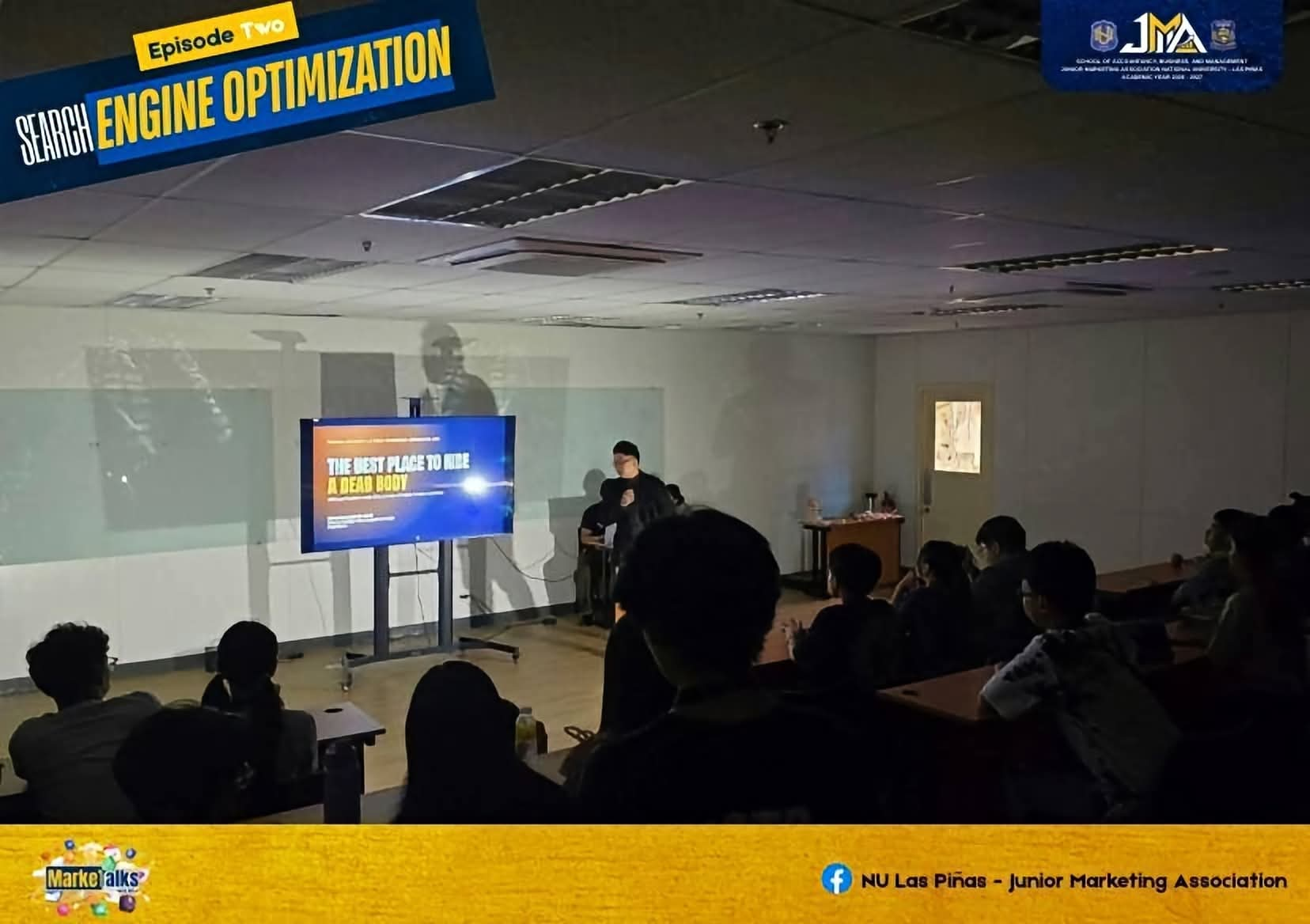
Presenting at Marketalks Episode Two: Search Engine Optimization. Photo from the NU Las Piñas Junior Marketing Association Facebook post.
Step 1: Start with the story, not the slides
I did not open PowerPoint first. I started with one question: what story will the students still remember after they leave the room?
I picked two stories:
- Rovelyn (fictional). She is a home cook in Bacoor who sells grilled buttered pork ribs. Her brand is Butter Bone Yeah! Her website looks great, but it only gets 3 visitors: herself, and the web developer checking that it still works.
- TSC (real). The Theresian School of Cavite is one of our clients. During the pandemic, they ranked #1 on Google for "School in Bacoor Cavite." After the contract ended, posting slowed down, the website and the Facebook page stopped matching, and the numbers dropped.
Why two stories? The fictional one explains SEO without hurting anyone. The real one proves it with data.
Step 2: Real data, no made-up numbers
The TSC part came from the real Google Search Console monthly reports of tsc.edu.ph, from April 2022 to September 2026. I had AI read 53 emails and turn them into a CSV and a timeline.
Here are some of the numbers that came out. All of them are from the reports:
- January to September, 2024 vs 2026: impressions up 125%, but clicks down 11%.
- Click rate fell from 4.1% to 1.6%.
- Best month: July 2023, with 767 clicks. September 2026: 273 clicks.
The lesson: Google still shows you, but people are not clicking anymore. Seen, but not clicked.
We kept two rules the whole time: no invented stats, and when we had no proof, we left a bracketed placeholder. For example, the #1 ranking in 2020 to 2021 comes from our own records, not from the Search Console emails, so that slide still says "[add proof]".
Step 3: The right order saves the talk
This is where version one went wrong. We told the TSC story at the start, then came back to it in the middle. It confused people.
The fix: we turned TSC into one straight story (slides 15 to 19). Right after the stat that "SEO isn't dead, but there are fewer clicks," I say, "Let me tell you about a real client of ours."
One more thing that helped: early in the talk I have this line: "Your business name is the wedding vow. The keyword is the first date." Then on the TSC slide, I bring it back: "This is what being married looks like." People already know the school, so they search for it by name.
Step 4: SEO, AEO, GEO and AIO, fact-checked before I taught them
I wanted the audience to leave with something new: SEO, AEO, GEO and AIO. But a lot of people say a lot of things about these terms, so we checked the primary sources first:
- Google itself says that optimizing for generative AI search is "still SEO." You do not need llms.txt, special markup, or to chop your content into tiny pieces. (This is only for Google. ChatGPT and the others have no equivalent official guide.)
- GEO comes from a research paper (Aggarwal et al., KDD 2024): up to 40% more visibility in AI answers in their tests. That is a lab test, not a guarantee.
- AIO has no standard meaning. Each vendor uses it differently. We said exactly that on the slide.
So the message became: one foundation, four doors. And if someone offers you a "guaranteed #1 on ChatGPT," block them. That is the SEO version of "double your money."
Step 5: Rovelyn's 7-step plan
No coding and no budget. A student can do it the same day:
- Learn the words your customers actually use.
- Claim your Google Business Profile.
- Make one page per product, titled the way people search.
- Answer people's questions (FAQ).
- Collect reviews, and reply to all of them.
- Connect everything: the same name on your socials, website and Google.
- Stay consistent, and check Search Console every month.
To make it more than words, we built mockups: a Google Business Profile, social profiles, Search Console, and a Google results page with Rovelyn at #1. All the numbers there are samples only, and I told the audience so. We also built a full mock website and brand kit for Butter Bone Yeah!
Step 6: Make every click feel like a story beat
One of the biggest upgrades was one-by-one reveals. The TSC timeline, the four letters and the cards all appear one at a time, with each click. When everything shows up at once, the audience reads the next point before I can tell the story.
As the guest speaker, I applied what Vinh Giang taught especially the Pause, Voice modulation and hand gestures.
Step 7: How it landed on cebkun.com
The slides were built as a Slides artifact in Claude. To publish them on the website:
- We left a handoff note in my brain (my Obsidian vault) for the cebkun.com agent.
- The agent built a viewer: one slide per screen, arrow keys or swipe, and the reveals still appear one by one. Speaker notes are removed from the public version.
- The links inside are live, so students can click through to the free learning resources.
- Only the deck went to production, not the whole dev branch.
None of the agents pushed to main without my OK.
What I learned
- Story first. The slides follow the story, not the other way around.
- Fiction to teach, real data to prove.
- Check claims against the primary source, especially for new buzzwords.
- One story, one straight line. If you jump back and forth, the audience gets lost.
- AI agents are fast, but you still make the decisions: what to publish, what to hide, and what is true.
Want to try what I did?
All the tools in the 7 steps are free. Google Business Profile and Search Console cost nothing. Slide 41 of the deck lists free courses: the Google SEO Starter Guide, Moz, Ahrefs, Semrush, HubSpot and TESDA.
Closing note, thanks to the NU Las Piñas JMA, and I hope you learned a lot from that Episode. I hope your program will expand and will have more episodes and even seasons!
Thank you, NU Las Piñas.
Butter Bone...
YEAH!
A thank-you from NU Las Piñas
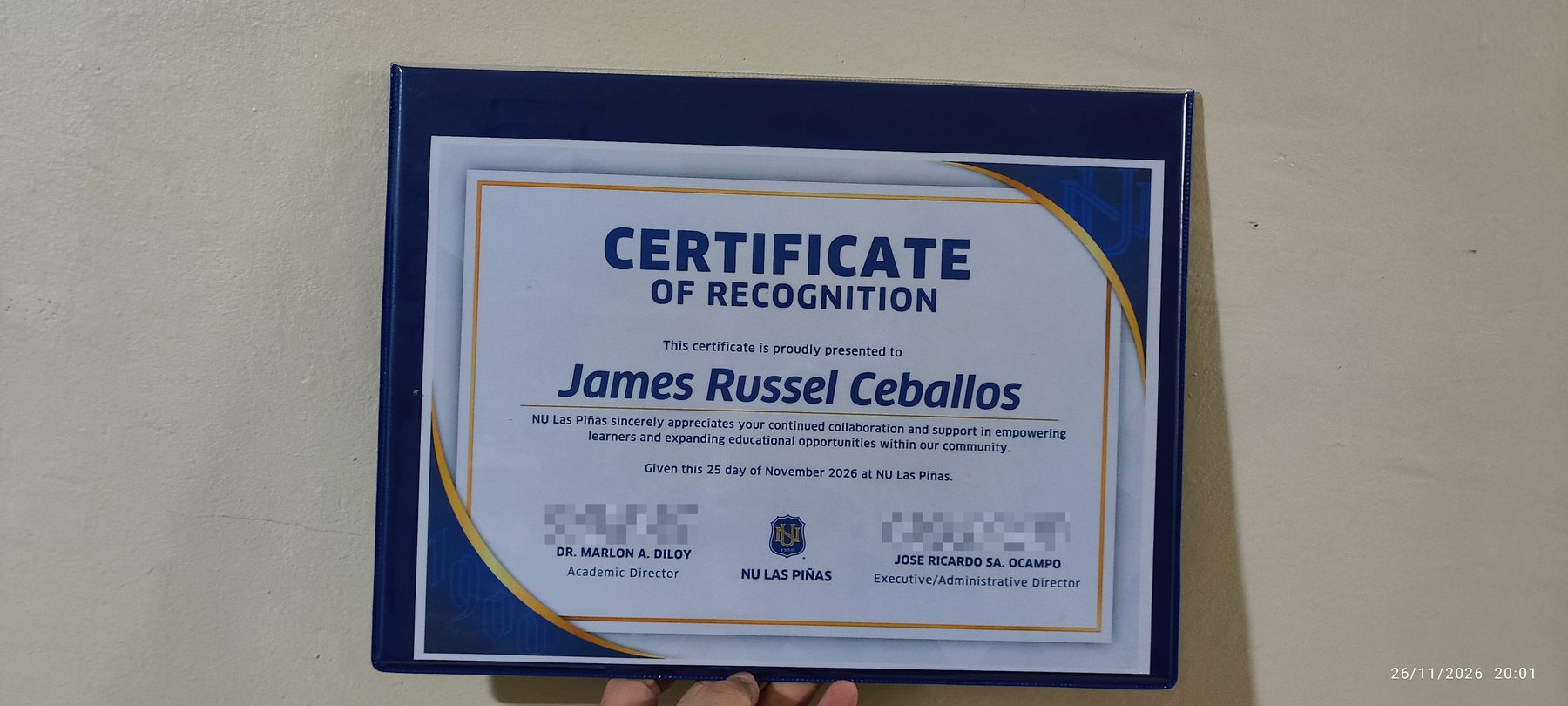
The Certificate of Recognition from NU Las Piñas. The signature areas are covered on purpose, so the signatures can't be copied.